Bees: the keystone of our food security.
A healthy diet depends on healthy pollinators. A few figures are enough to realize this:
- 4000 varieties of fruits and vegetables would not exist without pollination.
- 35% of world food production depends on pollinating insects.
- 80% of the pollination is taken care of by bees and wasps.
- $ 265 billion: this is the estimated annual value of the service provided by pollination in the world.
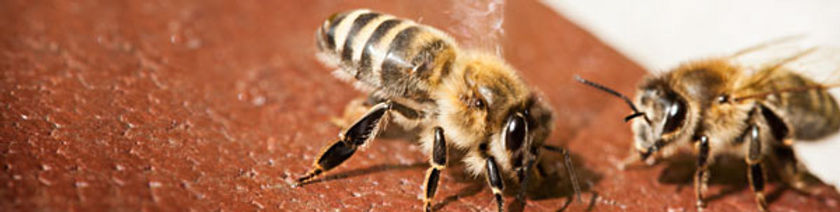
And yet, they disappear.
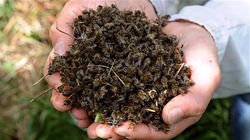
20% mortality on average in Europe and up to 53% in certain regions of the world: the situation is dramatic.
The main reasons
They are numerous and interact with one another: climatic disturbances, new viruses and pathogens, mites (varroa destructor), parasites (nosema ceranae), disappearance of natural habitats linked to monocultures, and of course phytosanitary treatments.
The appalling effects of pesticides.
Slow development, malformations, loss of orientation (bees no longer find their hives), inability to recognize flowers, weakened immune defenses .... Not to mention that pollinators are exposed to the risks of chemical cocktails. Bees can feed on pollen containing up to seven different pesticides!

Proven toxicity
The toxicity of direct contact is not denied by manufacturers. But the effects of repeated exposure to low doses must also be taken into account. Pesticide residues in nectar, pollen and even water from treated plants are also a deadly hazard.
Seven killers to banish urgently!
Imidacloprid, thiamethoxam, clothianidin, fipronil, chlorpyriphos, cypermethrin and deltamethrin: so many barbarian names that we must definitively delete lists!
Three of these insecticides (imidacloprid, thiamethoxam and clothianidin) belong to the class of neonicotinoids (one hundred times more toxic than other insecticides) and so-called systemic pesticides, which are particularly dangerous because they penetrate the whole plant. 80,000 bees can be killed by a single corn grain coated with 0.5 mg of clothianidin!
 |  |
|---|---|
 |  |
 |
We must act quickly and in the long term.
In addition to the immediate ban on these poisons, it is necessary to support and promote agricultural practices favoring biodiversity (including fields) and pollination services (mixed crops, areas of ecological interest, crop rotation ... ), Improve the conservation of natural and semi-natural habitats and increase funding for research, development and application of environmentally friendly agricultural practices.